
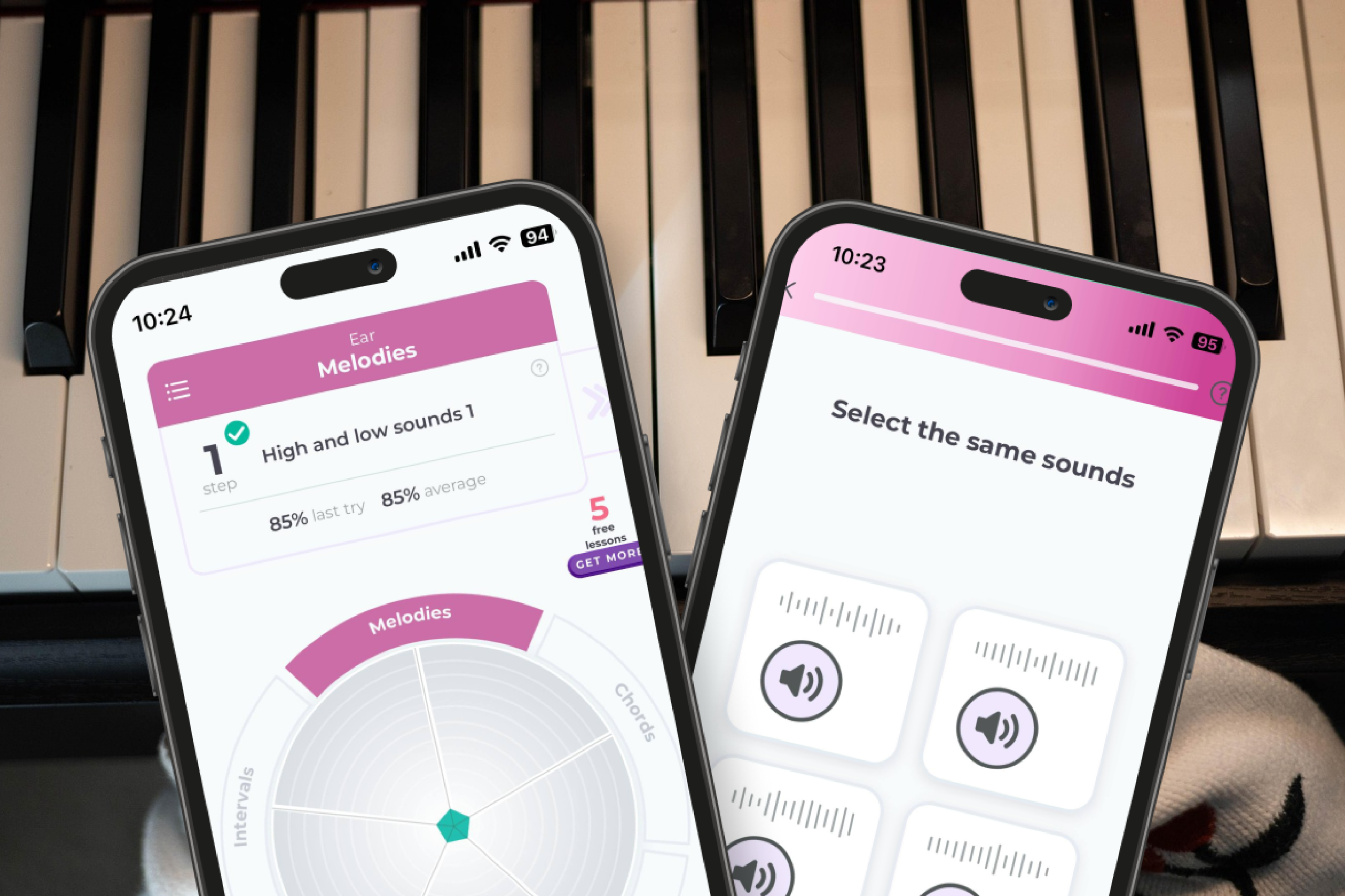
Introduction Why Difficult Passages Cause Difficulties for Musicians
A feeling familiar to every musician is that some fragment of the piece, at first sight, as if stands in the way to mastery.
Saturated with fast transitions, unusual rhythms, and intricate melodic lines, these very difficult passages are often a real obstacle.
The problems of mastering them are related not only to the technical difficulty but also to deep insight into nuances of performance, tempo, and emotional dynamics.
Why then do such excerpts cause difficulties?
- Synchronization difficulty of movements: Fast sequences require precision and agility from the fingers, which do not arise instantly.
- Rhythmic Stability Issues: Uneven or complex rhythms become sources of distraction and time loss.
- Melodic interruptions: Transitions between notes are especially difficult when they go beyond the usual scale or demand special techniques.
- Psychological barrier: the fear of failure and internal tension provoke mistakes and spontaneous slowdowns.
From this follows the necessity of an intentional approach that promotes not the resistance to these difficulties but, on the contrary, their smooth overcoming.
Conscious practice from routine repetition-that’s what we created the toolkit for.
For targeted practice, use the loop function, Talented app, segment repetition, speed adjustment, phrase mastery — structured methods that turn obstacles into measurable wins. For broader context, many readers explore a keyboard piano learning app review to compare tooling for practice repetition and precision practice.
Overview of the App Functions — How the Loop Helps in Practice
Often, musicians repeat certain parts over and over with the purpose of improving skill, but without clear structure and tempo control, there is the result of an error fixation.
To solve this problem, the loop function was introduced into the app-a really handy and powerful tool that could seriously enhance the quality of training.
Main Features of the Loop Function
- Fragment Highlighting: enables highlighting a fragment of several seconds up to several bars.
- Automatic looping of selected fragment: Continuous repetition helps to build muscle memory.
- Adjustment of the playback speed: Slowing down without distorting the tone is helpful for mastering difficult moments.
- Stepwise progression through fragment: this is a feature convenient for the analysis of musical nuances and stops.
- Sound range visualization: It serves to illustrate the structure of the melody during repetition.
With this function, chaotic practice sessions cease: The user selects the problem area, focuses attention on it, and controls the learning tempo. Such structuring of repetitions allows one to significantly reduce the time it takes for mastering difficult passages and avoid learning “on autopilot” with errors.
| Function | Benefit to Musician | Result |
| Fragment cycling | Attention to problematic area | Quick removal of obstacles |
| Playback speed control | Tempo control and clarity of performance | Optimal assimilation of rhythmic and melodic details |
| Stepwise listening | Careful analysis of complex elements | Deep understanding and technique improvement |
Pro tip: Reinforce segment repetition with speed adjustment and adaptive segment looping to stabilize timing before expanding to longer mastery segments.
Methods of Working With Rhythmic and Melodic Difficulties via Loop
Since most rhythmic and melodic complexities require a multi-faceted approach, the loop function finds much use here. Following are methods through which practice can be made more effective:
- Rhythmic stabilization: Looping of the problematic rhythmic pattern allows it to be learned through repeated listening and execution. During this process, clarity and evenness of performance should be maintained, using metronome control.
- Phrase division: the melodic line needs to be divided into phrases, and each should be worked on separately. In this way, you will be able to pay more attention to potential intonation and articulation problems.
- Pointing out dissonances and sudden transitions: Looping allows taking problematic dissonant intervals or sudden melodic turns several times, making getting used to them easier.
- Tempo and dynamics combined: Looped practice can be varied with tempo and dynamics. Play slowly and softly to practice precision, for example, and then add normal tempo with volume for control in expressiveness.
Sample algorithm for working with melodic and rhythmic complexities through the loop:
- Correct the problematic segment.
- Slow down the tempo to your comfort.
- Play the loop, paying a lot of attention to rhythm.
- Work on articulation and intonation.
- Repeat, gradually increasing the tempo and dynamic range.
Use segment repetition and speed adjustment as challenge loops that guide section repetition toward durable phrase mastery.
Tips to Enhance Practice Effectiveness Using the Loop Function
While Talented’s loop function is effectively used in significantly speeding up one’s mastery of complex musical passages, disappointment could arise from the lack of a systematic approach. What follows are several practical recommendations that one can follow in order to be more productive and avoid common mistakes.
Bottom line: combine segment looping with speed adjustment and precision practice to turn focused segments into mastery segments inside the Talented app.
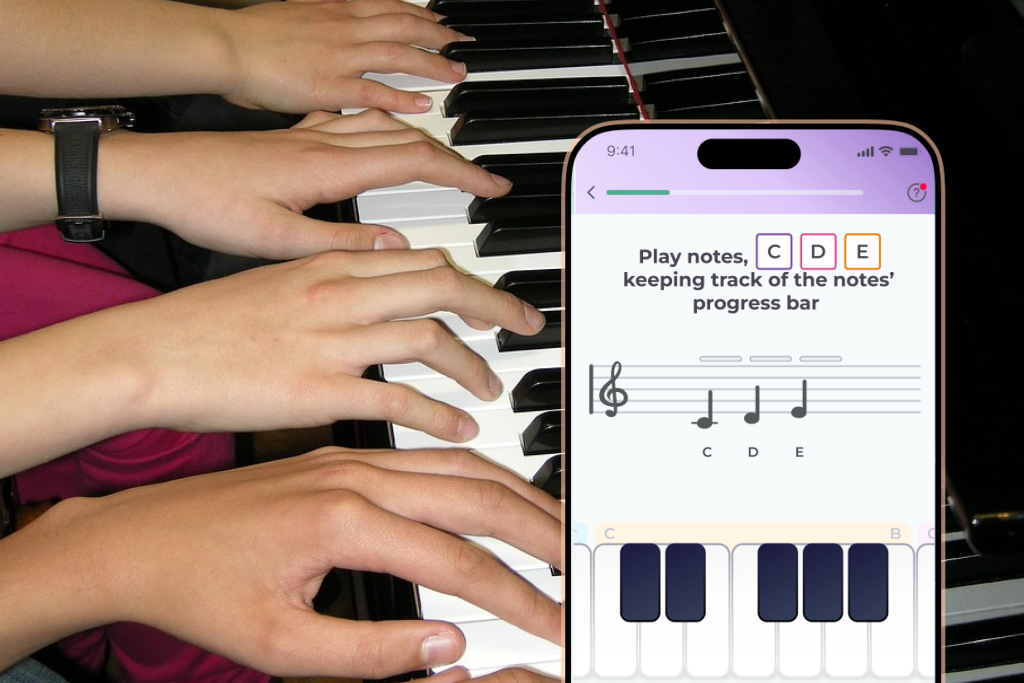
Successful Loop Application on Real Musical Passages
- Clearly targeted objectives in every session: increasing rhythmic precision, clarifying intonation, and accelerating tempo.
- Regularity and systematic practice is the best condition for the development of skills.
- Gradual expansion of the loop if the initial segment is mastered successfully helps to include this complex passage into the overall musical context.
These real examples confirm: proper use of the loop function not only eases the study of complex musical fragments but also significantly accelerates the learning process, making it more structured and motivating. Hope that the experience of our users will become an inspiration for you too on the path to overcoming difficult passages.
Conclusion Results and Recommendations for Regular Practice
It can be confidently said, summarizing: much easier is the mastering of the most complicated musical fragments with the help of the loop function in Talented. It is not a mechanical repetition of fragments that this function allows working with but deep immersion into every detail: whether it is the subtleties of rhythm, articulation, or dynamics.
Thus, in Talented app, the loop function is a powerful tool serving the musician to let him focus precisely on elements that cause the biggest difficulties and overcome them gradually. Never be afraid to experiment with settings, analyze your mistakes, note your progress. Worth remembering at the end: stable success and mastery come through consistency and mindfulness in practice. Your ally on the path to musical perfection is the loop function—anchored by segment repetition, speed adjustment, and phrase mastery for reliable progress.


Leave a Reply
You must be logged in to post a comment.